



How are ocean waves described?
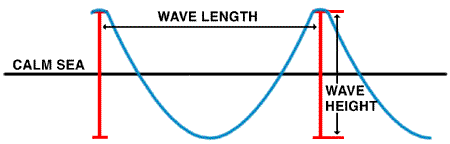
Scientists use two measures to describe ocean waves: height and length. As is shown on the figure, wave height is defined as the height of the wave from the wave top, called the wave crest to the bottom of the wave, called the wave trough. The wave length is defined as the horizontal distance between two successive crests or troughs.
During storms, the wave heights increase while the wave lengths decrease. Wave heights during storms may exceed 10 meters (33 feet)!! These waves are extremely dangerous to any boater or surfer out on the water. So, stay out of the water during storms. The wave length during storms tend to decrease; some may be as small as 15 meters (50 feet).
What do you think happens to wave height during a hurricane?
 NDBC on Facebook
 NOAA on LinkedIn
 NDBC on Twitter